Tier 1 · Safety issue
Evidence of real harm
Declared allergens, banned-elsewhere additives, residues above limits. Surfaced first, always.
iPhone & iPad · Food label scanner
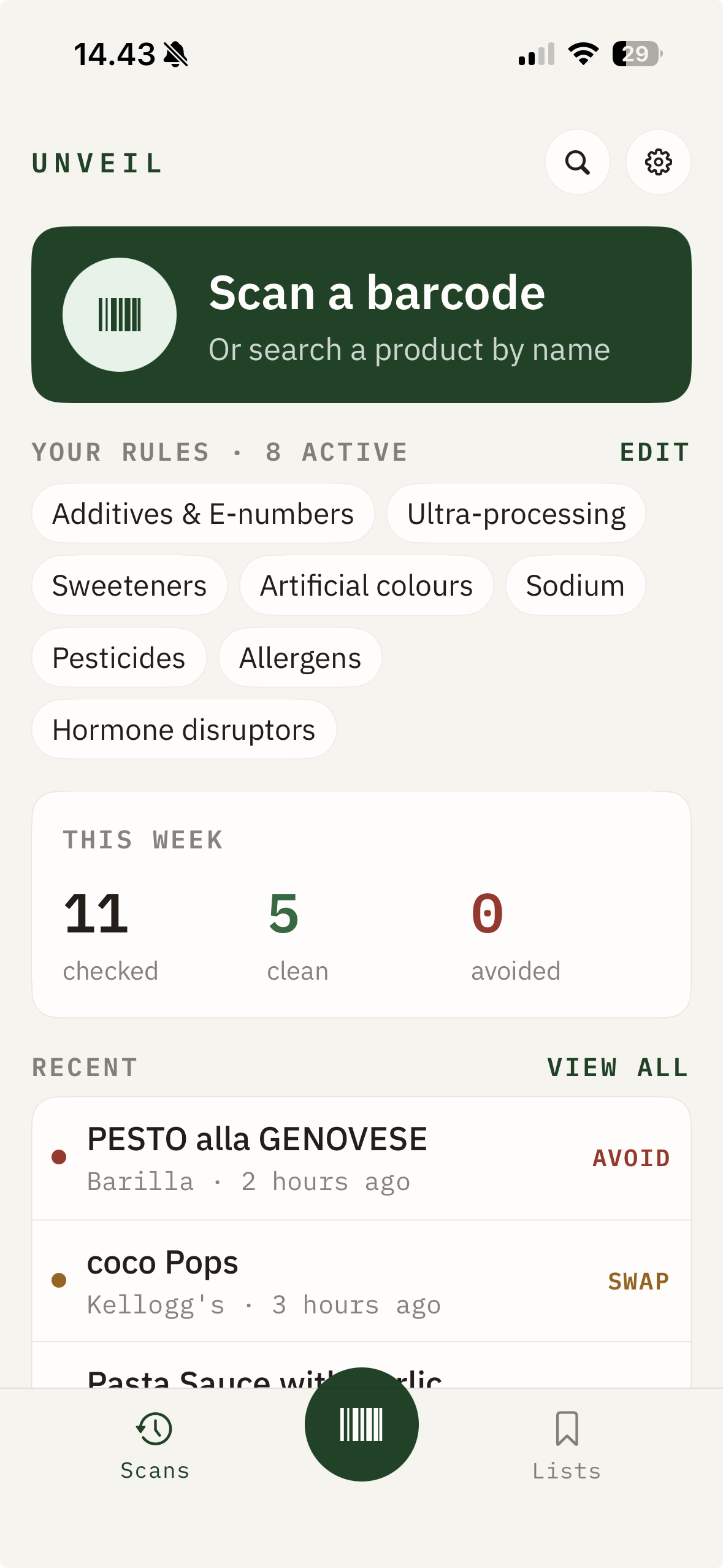
Point Ownplate at a barcode and you get one word back — then the reason in a single sentence, then something better you can actually buy. You can be done before the trolley stops moving.
Free to use
Premium unlocks unlimited scans
Not every flag deserves the same alarm
Show it beside something that genuinely matters and the score stops meaning anything — and you stop believing any of it. Ownplate ranks every finding by the weight of the evidence behind it, into three tiers.
Allergens always come first, because they're the only thing on the screen that can put someone in hospital. And we say what's fine out loud.
Tier 1 · Safety issue
Declared allergens, banned-elsewhere additives, residues above limits. Surfaced first, always.
Tier 2 · Worth knowing
Ultra-processing, salt, added sugar, sweeteners. Context, not alarm — and shortfalls like low fibre are marked low, not dangerous.
Tier 3 · Simply fine
E330 lives here. A scanner that can only find fault isn't informing you.
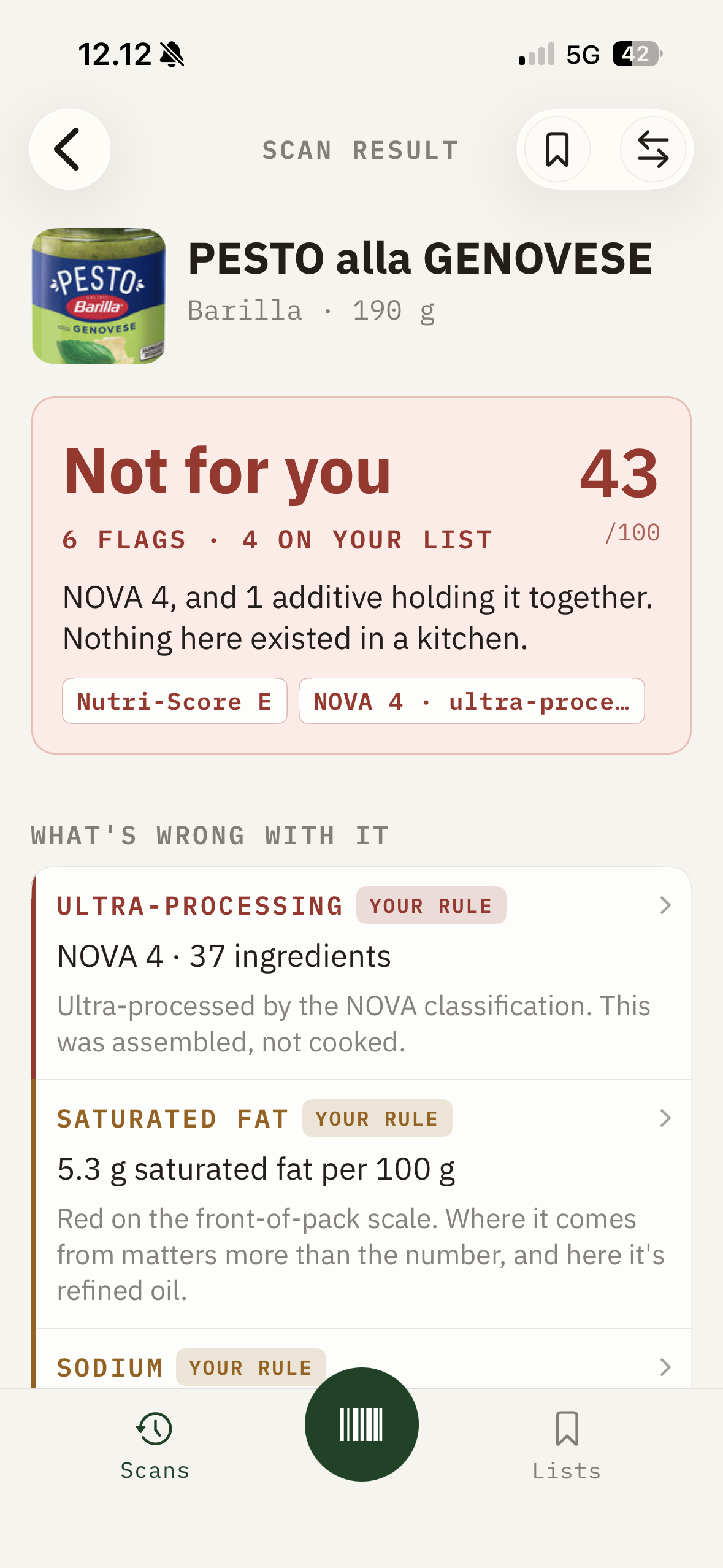
Six screens · that's the whole app
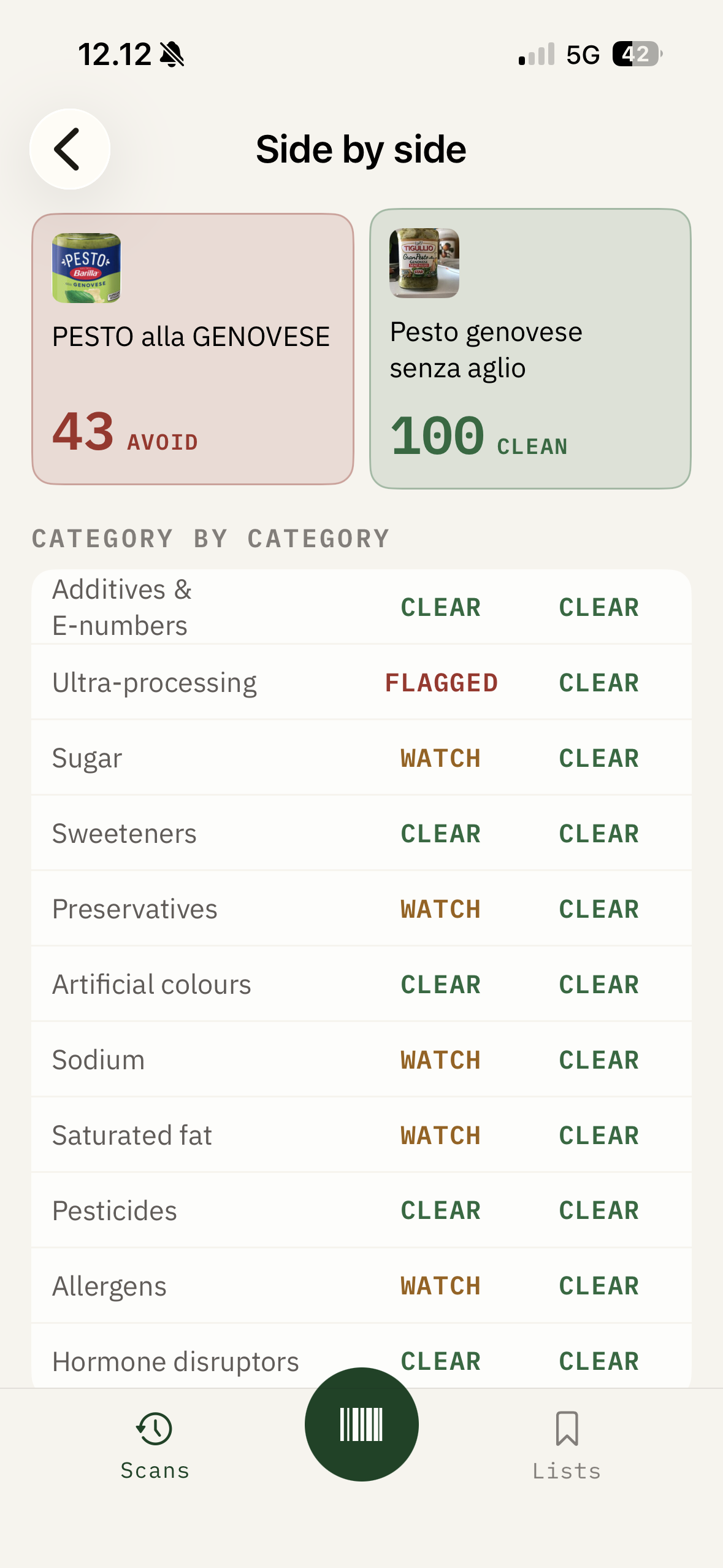
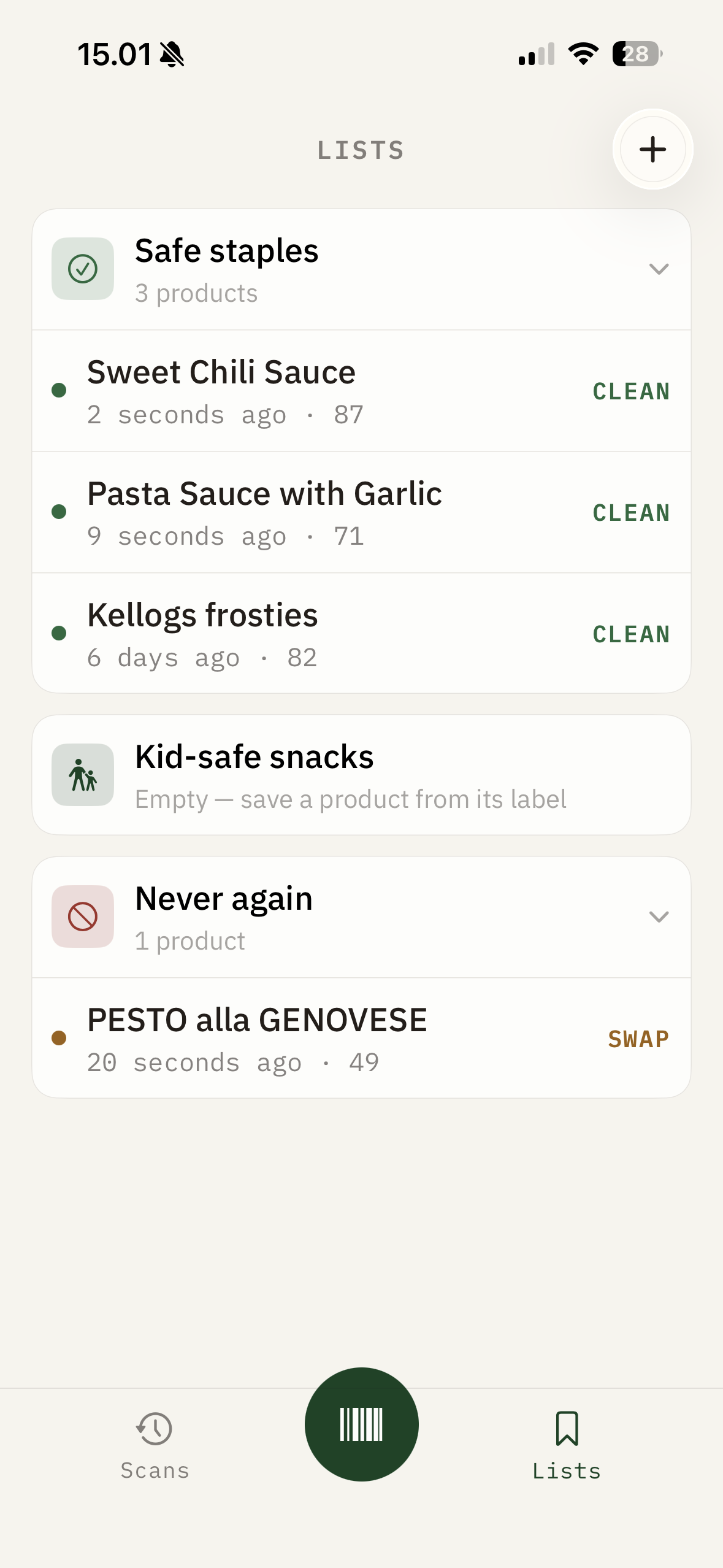
Your rules, not ours
No sweeteners. Watch salt. Milk, for a child who reacts to it. Choose relaxed, balanced or strict — and see exactly what changes.
Try it — toggle the rules below
Pesto alla Genovese
190 g jar · 37 ingredients
not for you
6 findings · 1 safety-tier · balanced
35
/100
What that's made of
A demonstration of the model, using one real jar. In the app, the weights and sources behind this sit one tap away under How we score.
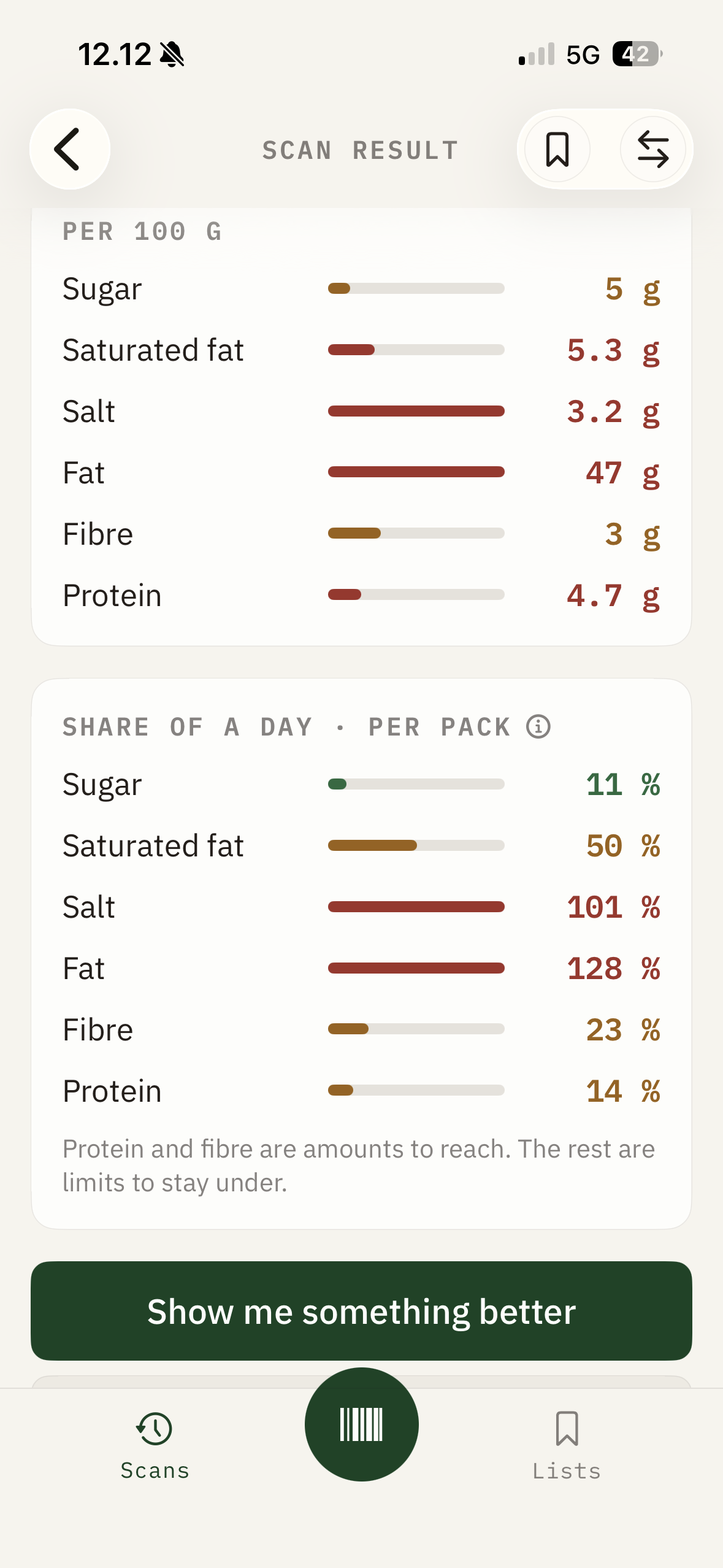
The portion you'll actually eat
So “1.0 g of salt” becomes “17% of your day” — no arithmetic, no per-100-g abstraction. Protein and fibre are amounts to reach. The rest are limits to stay under.
And when Nutri-Score and NOVA disagree about a product, we show you both and explain why both are right.
Share of a day · per pack
190 g · one jar
Fibre and protein read as shortfalls here — marked low, never marked as danger.
If you're comparing food scanners
Most people arrive at Ownplate from another food scanner or ingredient checker — Yuka, Olive, Bobby Approved, Trash Panda, OneLabel, WISEcode, Fooducate, EWG Healthy Living, Fig, Spoonful, Allergio, Ryla, Peelback, EatClean, CheckFuud, Nutristant, Label or inlabel. We won't characterise any of them here. They change, and they can describe themselves better than we can.
What we can tell you is what Ownplate chose to do differently, so you can judge whether it's the part you were missing.
A simple verdict
A score on its own tells you nothing about why. Ownplate answers in plain language first, then ranks every finding by the weight of the evidence behind it — so a preservative that matters doesn't sit level with citric acid.
Independent ratings
Science-backed scoring with the weights and the sources printed inside the app, under How we score. Product data comes from Open Food Facts, the open database. No brand pays to rank higher, because there is nothing to buy.
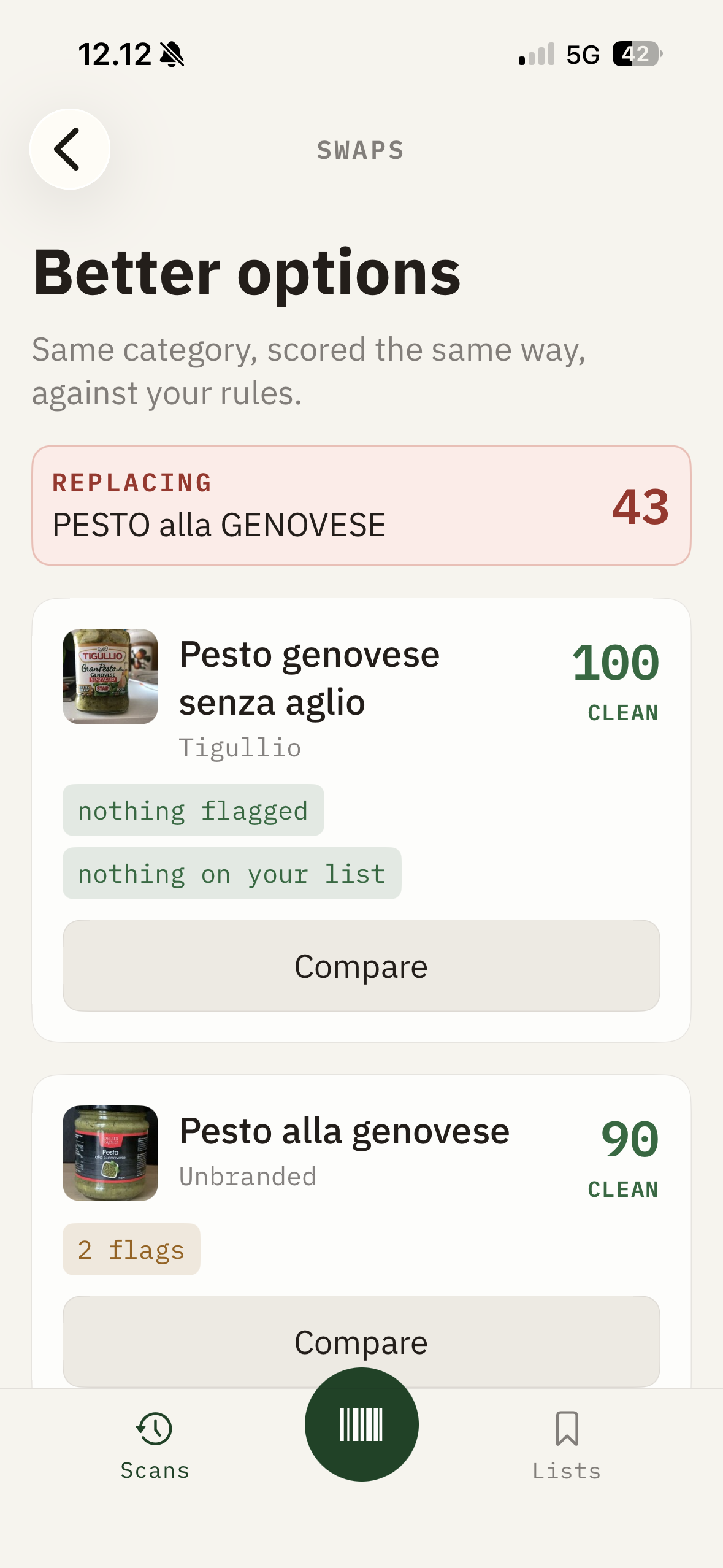
Healthier alternatives
A swap is only useful if it's the same kind of thing, judged by the same rules. Ownplate's healthier alternatives stay inside the category and are scored identically — no cross-selling a protein bar against a jar of pesto.
What it checks, and what it doesn't
Eight are on from the start: additives and E-numbers, ultra-processing (UPF/NOVA), sweeteners, artificial colours, sodium, allergens, pesticide residues and suspected hormone disruptors. Four more are waiting in Rules — added sugar, seed oils, preservatives and saturated fat — and turning one on re-scores everything you have already scanned. Where nutrition grades disagree — Nutri-Score saying one thing, NOVA another — you get both, and the reason each is right on its own terms.
The edge, stated plainly
Allergens come first, always, read from the pack's own bold-type declaration — gluten and milk included. Treat that as a starting point for an allergy or an intolerance, not a clearance.
Ownplate does not certify a product as gluten-free, vegan, or low-FODMAP, and it will never tell you a food is full of toxins. It tells you what the label declares, how strong the evidence behind each finding is, and where that judgement came from. The rest is yours.
An educational tool for reading labels, not medical or dietary advice. If you're managing an allergy or a health condition, the pack and your clinician outrank any app.
iPhone & iPad · Requires iOS 18 · No scan history sold, ever